Twelve Dollars, All You Can Eat: America's Friendliest Night Out Is at the Lodge Hall
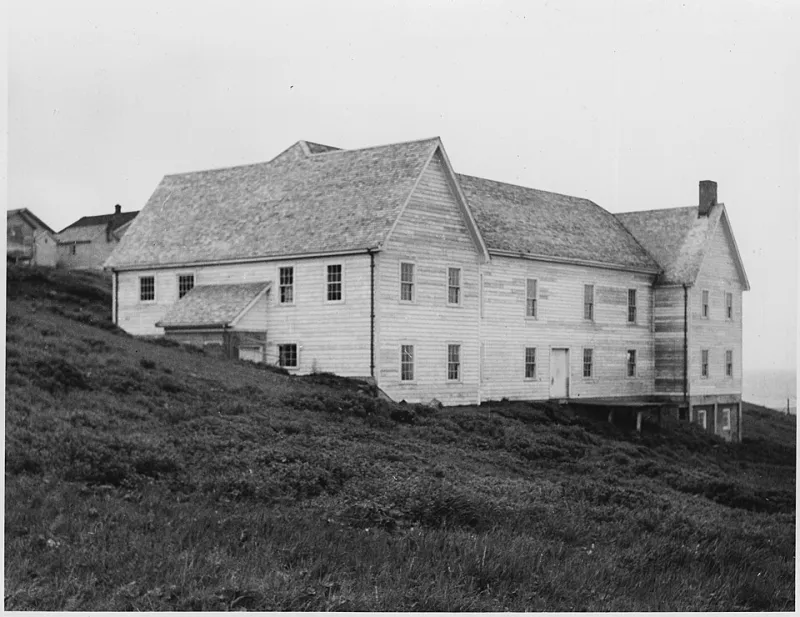
Photo: Unknown authorUnknown author or not provided, Public domain, via Wikimedia Commons
It's 5:40 on a Friday and the line is already out the door of the VFW hall, past the flagpole, wrapping around the parking lot where someone has left a truck running with the hazards on. Inside, the air is batter and hot oil and coffee that has been on since 3 p.m. A hand-lettered sign taped over the serving window lists two prices: adult, and under twelve.
Adults are paying around twelve dollars for all-you-can-eat fish.
Try to spend that on a Friday night anywhere else. A burger and a beer runs close to twenty-five. A single cocktail in a nice downtown place runs eighteen. Meanwhile the hall down the street from your apartment — the one you've walked past for years and assumed was members only, or sad, or both — is serving haddock, coleslaw, a roll, a dessert table, and more conversation than you've had in a month, and the money is going to a roof fund.
The economics of a twelve-dollar plate
None of this adds up on a spreadsheet, and that's the point. The hall owns its building, often decades ago and free and clear. The labor is volunteer. The fry cook is a retired guy named after his grandfather. Someone's wife brings potato salad as a contribution, not a cost.
That leaves food and utilities. Which means the margin on a twelve-dollar plate is thin but real, and the night is doing double duty as a fundraiser and a civic service. Everything is cash, which keeps it simple and keeps the tips in a coffee can next to the dessert table.
The scale surprised me. A good fish fry will move several hundred meals in two and a half hours. Multiply that by twelve dollars, do the napkin math on what a plate of fish and a scoop of coleslaw actually costs by the case, and you arrive at a genuinely meaningful chunk of a hall's annual budget — earned in a handful of Fridays during Lent, plus a few throughout the year to keep the lights on.
The membership problem nobody's solving
The halls are, by every available measure, shrinking. Veterans service organizations that once counted membership in the millions have watched it decline for a generation; the people who join are older every year, and the buildings themselves need roofs and boilers and ADA bathrooms that cost more than a fish fry brings in.
Churches face the same math. The ladies' aid society that ran the harvest supper is now a smaller group with the same jobs. The supper is still a highlight — and increasingly it's a recruitment tool nobody's calling a recruitment tool. If you're the only person under fifty at the pancake breakfast, you're not the odd one out. You're the point.
How to find one near you
The hunting is easier than it used to be, which is the one thing the internet has improved about all this.
- Check the community groups, not the tourist listings. Facebook pages for your town, the county, or a neighborhood will post a flyer with a photo of a paper sign and a phone number. That's the good stuff.
- The local paper still runs calendars. So does the free shopper that shows up in your mailbox.
- Look up the buildings themselves. Most national and state organizations list local posts and their contact info. Many churches publish a bulletin online.
- Ask at the hardware store. Seriously. The people who know about the pancake breakfast are the people buying a pound of 16-penny nails at 8 a.m.
- Know the difference between public and private. Fish fries, breakfasts, and suppers are typically open to anyone off the street. A canteen bar may require a member to sign you in as a guest — a phone call will settle it in thirty seconds.
What to expect when you walk in
- Bring cash. Small bills. There will be a cash box, possibly a person with a fanny pack. There probably will not be a card reader.
- Go early or go late. The peak is 5:30 to 6:30. Hit it at 4:30 or after 7 and the line is gone.
- You'll eat on a tray and sit at a folding table. This is not a slight. This is the format.
- Buy the raffle ticket. Buy several.
- Ask about the photos on the wall. This is the single best move available to you. Someone will tell you a story about a guy in one of them, and it will be a good story.
- Don't lead with war. If you're at a veterans hall, don't open with 'So what did you do overseas.' Let people tell you what they want to tell you, which may be about the fish.
- Tip the jar even though there's no table service, and sign the guestbook if there is one, because they are counting guests.
The thing that surprises first-timers most is how little friction there is. You walk in as an outsider and you are an outsider for roughly four minutes — the length of time it takes someone to hand you a plate and point at the coleslaw. Nobody asks you to join. Nobody needs your life story. The whole operation runs on the premise that a stranger in the doorway is a good thing, and it has run on that premise for sixty years, and it would very much like to keep running.
So look up the nearest hall, find the next Friday, and go. Twelve dollars. Take a twenty.