The No-Phone Room: Americans Are Building Tech-Free Sanctuaries — and Spending Serious Money to Do It
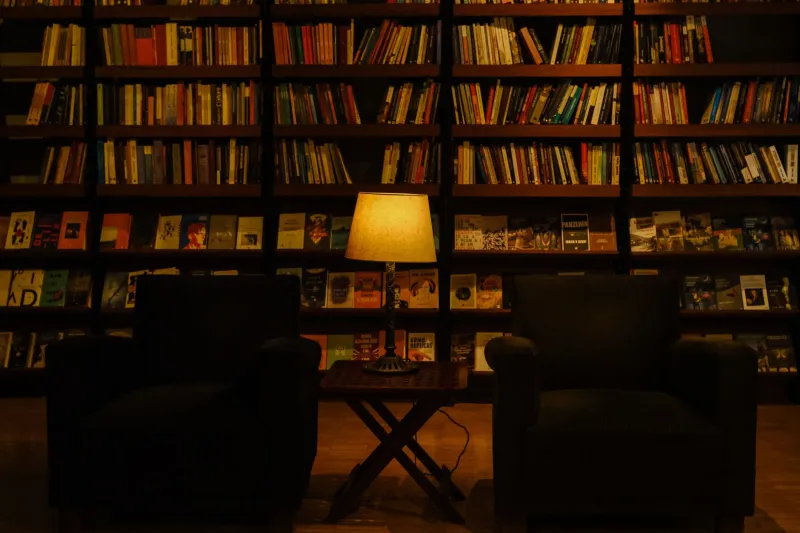
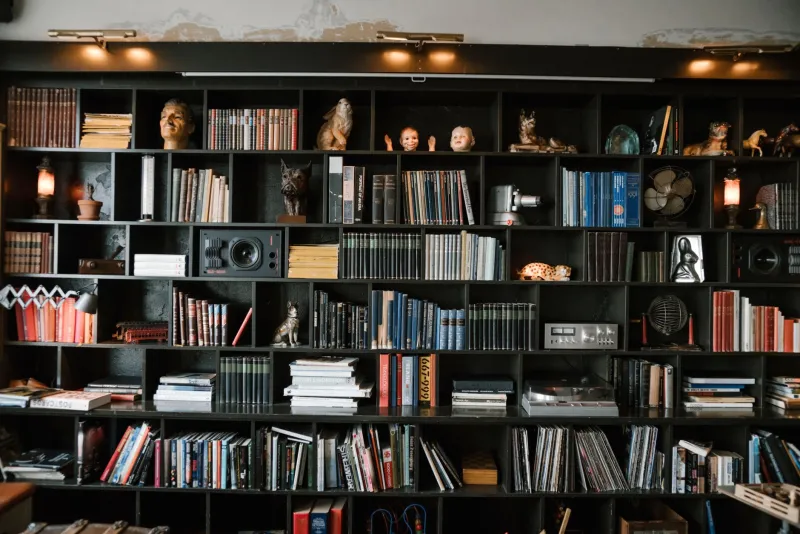
Somewhere in a suburb outside of Nashville, there's a room with no television, no smart speaker, no phone charger, and no Wi-Fi router. There's a leather armchair, a reading lamp, floor-to-ceiling bookshelves, and a small side table for a cup of tea. The door has a simple rule: if it has a screen, it stays outside.
The owner, a project manager in her early forties, spent just over $2,000 putting it together — shelving, lighting, a quality chair, some framed prints, a small rug. She calls it her library. Her kids call it "the weird room." She says it's the best money she's ever spent on her house.
She is not alone.
A Room With One Simple Rule
Across the country, a quiet but growing movement of homeowners is carving out intentional tech-free spaces in their homes — reading rooms, analog retreats, no-phone bedrooms — and treating them with the same seriousness they'd give a kitchen remodel or a primary bathroom upgrade.
The concept isn't complicated. Pick a room, or a corner, or even just a chair in a particular spot. Remove the screens. Add things that invite a different kind of attention — books, plants, good lighting, comfortable seating, maybe a record player or a chess set. Establish a norm, either personal or household-wide, that the space is for presence rather than connectivity.
Simple in theory. Surprisingly powerful in practice.
Why People Are Doing This Now
The timing makes sense if you think about it. Americans spent the better part of the last five years in their homes more than any previous generation — working, schooling, socializing, and entertaining almost entirely through screens. The home and the digital world blurred into each other in ways that felt necessary at the time and exhausting in retrospect.
For a lot of people, the realization crept up gradually: there was no room in the house that wasn't also, in some way, a work room, a social media room, or an entertainment consumption room. Every space had a screen in it. Every screen had notifications on it. The home stopped being a refuge and became just another arena of demands.
The tech-free room is, in part, a correction. A deliberate reclaiming of at least one space in the house where the ambient hum of connectivity just... stops.
What Goes In (and What Stays Out)
The specifics vary widely by household, but the framework is consistent: these spaces are built around analog pleasures and free from digital ones.
Books are almost universal — often the whole point. Good lighting matters enormously; people report investing in warm, adjustable lamps rather than harsh overhead fixtures. Comfortable seating is non-negotiable. Beyond that, the contents reflect personal taste: some people add record players and vinyl collections, others bring in puzzles, knitting supplies, sketchbooks, or board games. Plants appear frequently, as do candles, tactile textiles, and objects with personal significance.
What's conspicuously absent: televisions, tablets, laptops, smart speakers, and — the big one — phones. Many people who've built these spaces describe the phone rule as the most psychologically significant piece of the whole setup. Not carrying your phone into the room changes the experience fundamentally, in ways that are hard to articulate but immediately felt.
"The first time I sat in there without my phone, I kept reaching for it," one homeowner described in a popular home blog post. "Like phantom limb syndrome. But after about twenty minutes, I started actually reading. Like, really reading. I forgot what that felt like."
The Dollars Behind the Dream
So what does a proper analog retreat actually cost?
It ranges dramatically. At the lower end, people are repurposing existing rooms or corners with minimal investment — a new bookshelf, a thrifted armchair, some good lighting — and spending a few hundred dollars. At the higher end, dedicated home libraries with custom built-ins, quality furniture, and curated details can run $5,000 to $10,000 or more.
The sweet spot that comes up most often in conversations about this trend is the $800 to $2,500 range — enough to do it properly without a full renovation. A solid reading chair from a quality furniture retailer runs $400 to $800. Decent shelving, $150 to $400. A good floor lamp, $80 to $200. Add a small rug, a few framed prints, and some books, and you have a functional sanctuary without a contractor.
For context, that's roughly what Americans spend on a mid-range television. The comparison isn't lost on people making this choice.
What the Research Actually Says
The mental health case for screen-free spaces isn't just vibes — there's real data behind it. Studies on phone-free environments consistently show reductions in anxiety and improvements in focus and mood. Research on reading (particularly fiction, particularly on physical pages rather than screens) shows benefits for empathy, stress reduction, and cognitive function.
Sleep researchers have been saying for years that keeping screens out of the bedroom improves sleep quality. The tech-free bedroom is perhaps the most evidence-backed version of this trend, and it's the one most commonly reported as transformative by people who try it. Better sleep changes everything downstream — mood, focus, relationships, energy.
But beyond the clinical data, there's something harder to measure that people describe again and again: a feeling of reclaiming their own attention. Of choosing, deliberately, what to think about and for how long. Of not being ambient-available to every notification and platform and feed.
Quiet Luxury, Redefined
There's a phrase floating around design circles lately: "quiet luxury." It usually refers to understated, high-quality aesthetics — neutral tones, expensive materials, nothing flashy. But in the context of the tech-free room movement, it takes on a different meaning.
The real luxury, it turns out, isn't a marble countertop or a soaking tub. It's an hour in a comfortable chair with a good book and absolutely nobody able to reach you.
That's the thing people are spending money on now. Not a faster router or a bigger screen, but a room where neither one exists. A space that belongs, fully and stubbornly, to the offline world.
And if the waiting lists at furniture stores specializing in reading chairs are any indication, the demand for that kind of space isn't slowing down anytime soon.