Clutter With a Story: Why Americans Are Proudly Filling Their Homes With Everything Minimalism Told Them to Throw Away
For about a decade, the aspirational American home looked like a high-end hotel that nobody actually lived in. White walls. A single statement plant. Furniture that could be described, without irony, as "sculptural." If you had too many books out, you turned them spine-in so the covers wouldn't create visual noise. If you had a collection of anything — vintage cameras, ceramic animals, old baseball cards — you were told, firmly, to edit.
Minimalism wasn't just an aesthetic. It was a moral position. Less stuff meant less stress. Less stuff meant clarity. Less stuff meant you had figured something out that your cluttered neighbors hadn't.
Except a lot of people were quietly miserable in their own immaculate homes.
The Pendulum Swings Back
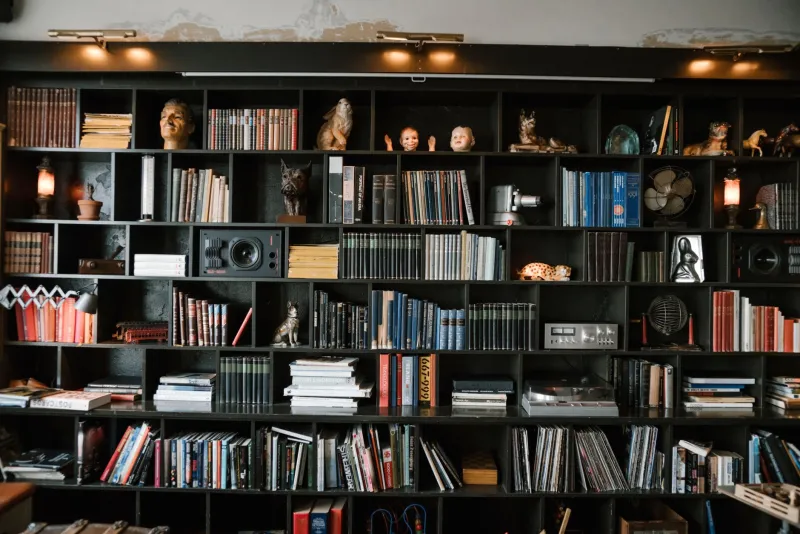
Something shifted, and it shifted hard. Scroll through home decor content on Instagram or TikTok today and you'll find a completely different visual language dominating the conversation. Shelves packed with pottery, pressed flowers, vintage globes, and stacked books (spines out, thank you). Walls covered in framed prints, mirrors, and inherited oil paintings. Mantlepieces layered with objects that clearly arrived from different decades and different people.
This aesthetic goes by a few names — "maximalism," the "collected look," "curated clutter" — but the underlying idea is consistent: a home should accumulate meaning over time, not be stripped of it.
Interior designers are noticing. "Clients used to come in and say 'I want it to feel clean and calm,'" one Chicago-based designer told a home décor publication last year. "Now they're coming in with boxes of things they want to incorporate — their grandmother's dishes, flea market finds, things they've been storing in the basement because they felt embarrassed to display them. The whole conversation has changed."
Why We Stored the Good Stuff in the First Place
It's worth asking how we got here — specifically, why so many Americans spent years hiding the things they actually loved.
Minimalism, at its cultural peak, carried a subtle but persistent message: objects are a burden. Accumulation is a character flaw. The clean home signals a clean mind, and the cluttered home signals the opposite. Marie Kondo's global phenomenon wasn't just a cleaning method — it was a philosophy that treated possessions as suspects until proven innocent.
For people with deep attachments to inherited objects, vintage collections, or simply the comfortable accumulation of a life well-lived, that message stung. Suddenly, your grandmother's ceramic rooster collection wasn't charming — it was a problem to solve.
But something interesting happened when people actually cleared everything out. A lot of them felt worse, not better. The space didn't feel calm. It felt empty. It felt like they'd edited out pieces of themselves.
Objects That Carry Weight
There's legitimate psychology behind why surrounding yourself with meaningful objects feels good. Researchers studying what's sometimes called "material culture" have found that possessions tied to memories, people, or experiences function as external memory cues — physical anchors to identity and personal history.
In plain English: your stuff tells you who you are.
That chipped mug from a road trip through New Mexico. The lamp your dad refinished in the garage. The stack of paperbacks with your college roommate's annotations in the margins. These aren't clutter. They're biography.
Stripping them away in pursuit of a cleaner aesthetic doesn't just tidy a room — for many people, it quietly erases a sense of self. And the growing movement to bring these objects back out, display them proudly, and build a home around them is, at its core, an act of reclamation.
The Rise of the Collected Aesthetic
On social media, the collected home has become a full-fledged visual genre. Hashtags like #maximalism, #oldhouselove, and #cottagecore collectively pull hundreds of millions of views. Accounts dedicated to eclectic, object-dense interiors regularly outperform the sparse, gallery-white spaces that dominated feeds just a few years ago.
What's particularly interesting is who's driving this. It's not just older homeowners reconnecting with family heirlooms. Younger Americans — millennials and Gen Z buyers furnishing their first real spaces — are actively seeking out the layered, time-worn look. They're haunting estate sales, raiding thrift stores, and specifically looking for things that feel like they've been somewhere, belonged to someone, accumulated a little history.
Flat-pack furniture and matching sets hold less appeal for a generation that grew up in algorithmically curated, eerily similar digital spaces. In the physical world, they want texture. They want specificity. They want something a stranger couldn't have.
Having 'Too Much Stuff' Hits Different Now
The language around home accumulation is shifting too. "Too much stuff" used to be a diagnosis. Now, in the right circles, it reads more like a compliment — evidence of a life with range, of travels taken, of people loved, of interests pursued without apology.
The key distinction, and it's an important one, is intentionality. The collected aesthetic isn't about hoarding or avoidance. It's about curation — the deliberate decision to keep things that carry meaning and display them in a way that feels considered rather than chaotic.
That's a genuinely different relationship with objects than either compulsive accumulation or reflexive minimalism. It's slower, more thoughtful, and arguably more honest about what homes are actually for.
A home isn't a showroom. It's a record of a life. And more Americans, it seems, are finally ready to let it look like one.