Everyone's Coming to Dinner: The Surprising Comeback of the American Dinner Party
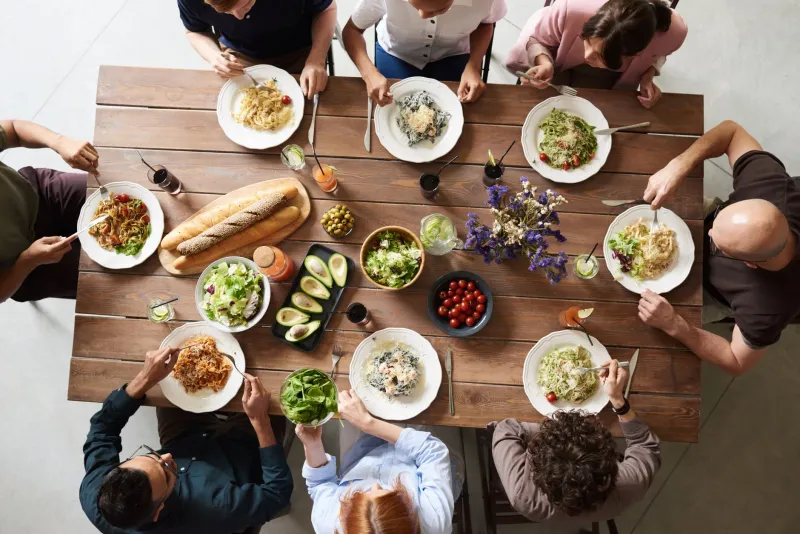
The Table Is Set Again
Somewhere between the pandemic's enforced isolation and the slow realization that spending Friday night alone watching a streaming service wasn't exactly fulfilling, something shifted. Americans started hosting again. Not just barbecues or birthday parties — actual dinner parties. Planned menus, set tables, candles, the works.
Walk through a home goods store on a Saturday morning and the evidence is hard to miss. Serving platters are back. Cloth napkins are back. People are buying tablecloths, which for a while seemed like something only grandmothers and Thanksgiving required. Cookbooks focused on entertaining — not just cooking — are selling. The dinner party, that most analog of social rituals, is having a genuine moment.
And it's not just a vibe. Sociologists, food writers, and therapists are all noticing it, and what they're saying about why it's happening is more interesting than the trend itself.
Screen Fatigue and the Search for Something Real
To understand the dinner party revival, you have to understand what it's pushing back against.
Digital social life has gotten very good at simulating connection. Group chats, video calls, shared playlists, comment sections — all of it creates a sense of being in touch without requiring anyone to actually be in the same room. For a while, that felt like enough. Maybe even better than enough, because it was so frictionless.
But friction, it turns out, is part of what makes experiences meaningful. The inconvenience of getting dressed, driving across town, sitting with someone for two or three hours without a screen to retreat into — that inconvenience is also what makes the experience stick. It signals to your brain that something worth remembering happened.
Researchers who study loneliness and social connection have been raising alarms for years about the quality of digital-only relationships. Former U.S. Surgeon General Dr. Vivek Murthy declared loneliness a public health epidemic in 2023, and the data behind that declaration is striking: even people with robust online social lives frequently report feeling isolated and disconnected. The quantity of contact is up. The depth of it is often down.
The dinner party is, in some ways, a direct response to that imbalance. It's high-friction, high-presence, and deeply human in a way that a group text simply cannot be.
What People Are Actually Cooking
One of the more interesting dimensions of this revival is what's showing up on the table — and what it says about how hosting culture has evolved.
The formal dinner party of previous generations came with a certain anxiety. The right china, the elaborate multi-course meal, the performance of domesticity. That version still exists, but it's not what's driving the current trend. What most people are describing is something more relaxed and more communal.
Pot luck-style gatherings where everyone brings a dish are hugely popular, partly because they distribute the labor and partly because they make the meal itself a kind of collaborative project. "Big batch" cooking — braises, pastas, grain salads, roasted vegetables — has replaced the fussy plated appetizer. The goal is abundance and ease, not perfection.
There's also a notable turn toward what food writers are calling "intentional cooking" — making things from scratch not because it's faster or cheaper but because the process itself is part of the evening. Hosts who make their own pasta or bake their own bread aren't just feeding their guests; they're sharing something they made with their hands, which carries a different weight than ordering in.
Ethnically diverse menus are also increasingly common, reflecting both the changing demographics of American cities and a broader cultural curiosity about food. A dinner party in 2025 might feature Korean braised short ribs, a Mexican-inspired corn salad, and a very American sheet cake for dessert. Nobody's worried about whether it's coherent. It just has to be good.
The Sociology of Sitting Down Together
Sociologists who study community formation have long understood that shared meals are among the most powerful bonding rituals humans have. The dinner table is where families negotiate their identities, where friendships deepen, where strangers become familiar. That dynamic doesn't disappear just because we have other options — but it does atrophy when we stop practicing it.
Dr. Robin Dunbar, the British anthropologist famous for "Dunbar's Number" (the idea that humans can maintain about 150 stable social relationships), has written extensively about the role of communal eating in maintaining close bonds. His research suggests that sharing food — especially in person, especially with some regularity — is one of the most reliable ways to strengthen relationships. The act of eating together triggers social bonding mechanisms that other forms of interaction simply don't activate as effectively.
In American cities especially, where people often live far from family and where neighborhoods don't always generate organic community, the dinner party fills a gap. It's a chosen family ritual — a way of saying these are my people and then acting like it.
How Hosting Customs Are Changing
The etiquette around dinner parties has loosened considerably, and that's arguably part of why more people feel comfortable hosting in the first place. The old rules — formal invitations, strict start times, thank-you notes within 48 hours — have mostly relaxed into something more flexible and forgiving.
Invitations go out over text. Start times are approximate. Guests are expected (and often encouraged) to drift into the kitchen and help. Dietary restrictions are taken seriously rather than treated as inconveniences. The evening ends when it ends, not when the host decides it's time.
This informality lowers the barrier to entry. You don't need a dining room or matching dishes or a tested recipe from a culinary magazine. You need a table, some chairs, something to eat, and people you want to spend time with. Everything else is optional.
Why It Matters More Than It Might Seem
It would be easy to write off the dinner party revival as a lifestyle trend — something for people with nice apartments and too much time on their hands. But there's something more meaningful happening here.
In a cultural moment defined by digital fragmentation, political division, and a pervasive sense that public life has become exhausting, the dinner party is a small act of repair. It says: I want to be in the same room as you. I want to feed you something. I want to hear what you've been thinking about. Let's sit down.
That's not a small thing. That might actually be the whole thing.
So if you've been thinking about hosting — putting it off because the apartment isn't clean enough or the menu isn't planned or you're not sure who to invite — this is your sign. Order the wine, make the pasta, set the table. People are hungry for more than food right now, and the table is one of the best places we've ever found to feed each other.