Forgot Your Password? So Does Everyone Else — Here's Why Tech Giants Are Finally Fixing That

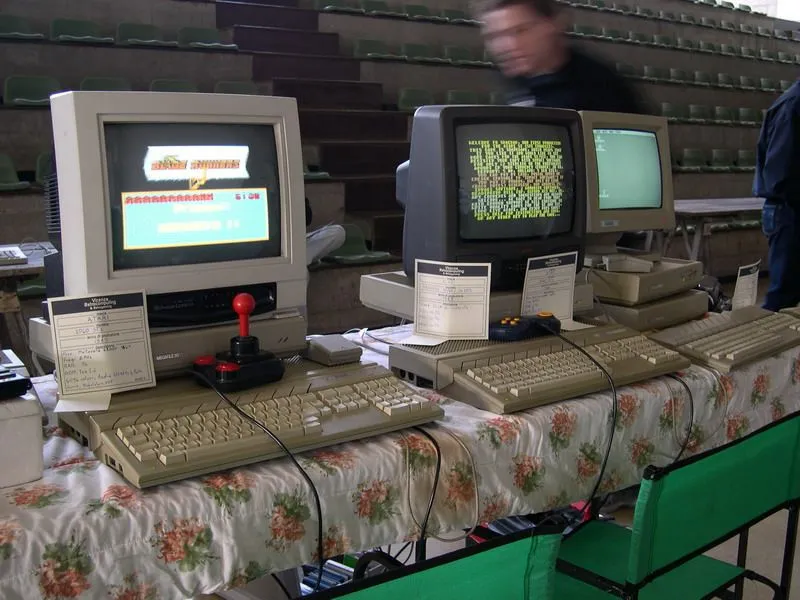
Photo: Erik Calonius, Public domain, via Wikimedia Commons
Let's be honest. At some point in the last week, you've stared at a login screen, typed in your go-to password, watched it fail, tried a variation, failed again, and then clicked "Forgot Password" with a quiet sigh of defeat. You're not alone — and you're definitely not getting worse at this. The problem, it turns out, is baked right into how our brains actually work.
According to a 2023 survey by password management company NordPass, the average person in the United States manages somewhere between 70 and 100 online accounts. That's 70 to 100 unique combinations of letters, numbers, and special characters that we're somehow supposed to keep locked away in our heads. Spoiler: we can't. And the tech industry has known this for years.
Your Brain Was Never Built for This
Here's a fun fact that should make you feel a little better: human memory was designed for survival, not cybersecurity compliance. Our brains are remarkably good at remembering faces, emotions, spatial layouts, and narratives. Strings of random characters like Tr0ub4dor&3? Not so much.
Cognitive psychologists call this the "interference effect" — when you learn similar information repeatedly, older memories get overwritten or muddled by newer ones. Every time you create a new password that's almost like an old one, you're essentially jamming the signal. Add in the fact that most people rotate variations of the same two or three base passwords, and you've got a recipe for the kind of mental fog that sends millions of Americans to password reset flows every single day.
"People aren't bad at passwords because they're careless," says one UX researcher who has spent years studying digital authentication habits. "They're bad at passwords because the entire system was designed without any real understanding of human cognition. We asked people to do something that's fundamentally unnatural."
The "Just Make It Complex" Era Was a Disaster
For a long time, the answer from the security world was to make passwords harder. Longer. More symbols. Mandatory capital letters. Expiration dates every 90 days. If you worked in corporate America in the early 2010s, you probably remember the agony of those IT department mandates.
The irony? Stricter password requirements made things less secure, not more. When people are forced to create passwords they can't remember, they write them on sticky notes, store them in unprotected spreadsheets, or just cycle through predictable patterns like Password1! → Password2!. Security researchers at the National Institute of Standards and Technology (NIST) eventually acknowledged this in updated guidelines, backing away from complexity rules in favor of length and uniqueness.
But by then, the damage was done. A culture of password fatigue had set in — and companies were scrambling to find a way out.
Enter Biometrics, Passkeys, and the Death of the Password
The tech industry's answer to our collective amnesia has arrived in a few different flavors, and they're all quietly reshaping how you log in every day.
Biometrics — think Face ID on your iPhone or the fingerprint scanner on your Android — offload the memory burden entirely. Your face is the password. It's convenient, fast, and nearly impossible to forget. But it comes with its own set of concerns. Unlike a password, you can't change your fingerprint if it's ever compromised in a data breach.
Single Sign-On (SSO) — the "Continue with Google" or "Log in with Apple" buttons you see everywhere — consolidates your digital identity into one master account. It's dramatically simpler. It's also a single point of catastrophic failure. If someone gets into your Google account, they potentially have access to dozens of services at once.
Passkeys, however, might be the most promising development of the bunch. Backed by Apple, Google, and Microsoft, passkeys use cryptographic key pairs — one stored on your device, one on the server — to authenticate you without ever transmitting an actual password. There's nothing for a hacker to steal from a database because there's no password stored in the first place. Major platforms including PayPal, Best Buy, and Shopify have already rolled out passkey support.
"Passkeys are genuinely exciting from a security standpoint," notes one cybersecurity professional familiar with enterprise authentication systems. "But adoption is still slow because people are used to passwords, and change is hard — even when the change is obviously better."
Trading One Vulnerability for Another?
Here's where it gets complicated. Every solution to the password problem introduces a new wrinkle.
Biometrics raise serious privacy questions — your facial geometry and fingerprint data have to live somewhere, and that somewhere is increasingly a corporate server. Passkeys are device-dependent, which means losing your phone without a proper backup could lock you out of your entire digital life. SSO convenience comes bundled with the risk of cascading account takeovers.
And then there's the deeper issue: none of these systems are universally accessible. Older users, people with disabilities, and those without high-end devices can find biometric and passkey systems frustrating or unusable. A secure future that only works for some people isn't really a secure future at all.
What Should You Actually Do Right Now?
While the tech world sorts out its grand unified theory of authentication, the practical advice hasn't changed much — it's just gotten easier to follow. A reputable password manager (options like Bitwarden, 1Password, or Apple's built-in Keychain are solid starting points) handles the memorization problem without requiring you to actually remember anything. You create one strong master password, and the app handles the rest.
Enable two-factor authentication wherever it's offered. Use passkeys when a site supports them. And please — stop reusing the same password across multiple accounts. That one habit is responsible for the vast majority of account takeovers.
The password graveyard is real, and it's overflowing. But for the first time in decades, the industry is building actual off-ramps. The future of logging in probably looks a lot less like typing and a lot more like just... being you. Whether that's reassuring or a little unsettling probably depends on how you feel about tech companies knowing your face.
Either way, it's a lot better than Password123!.