The Accidental Inventors: Obscure Gadgets That Quietly Rewired Modern Life
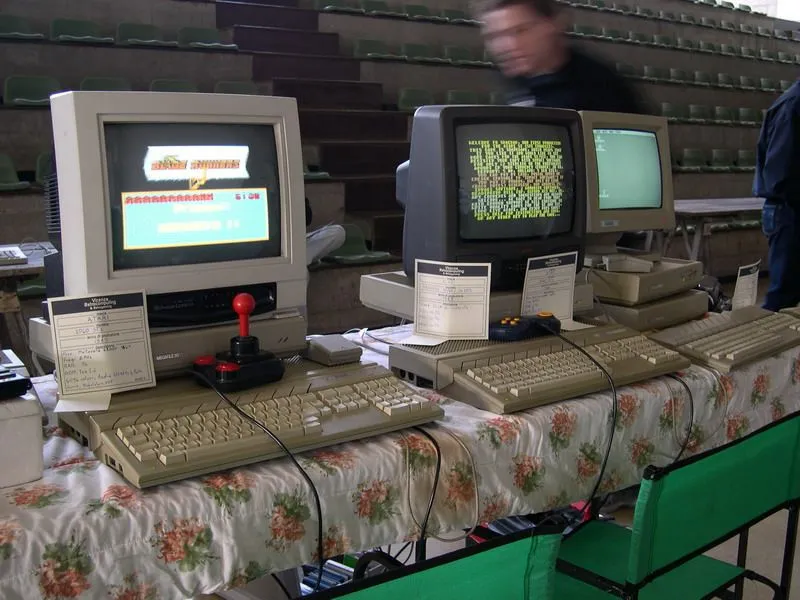
Photo: Zak1984, Public domain, via Wikimedia Commons
Everybody knows the big names. Edison. Jobs. Bell. Their stories get the documentaries, the Hollywood biopics, the TED Talks. But history has a funny habit of forgetting the people and inventions that actually did a lot of the heavy lifting. Some of the most transformative technologies in modern life were dreamed up by engineers nobody's ever heard of, or stumbled upon during experiments that were supposed to produce something else entirely.
So let's pull back the curtain on a few of those unsung heroes — and the gadgets they left behind.
The Sticky Note That Wasn't Supposed to Stick
If you've ever slapped a yellow Post-it note onto your monitor or fridge, you've benefited from one of the most gloriously accidental inventions of the 20th century. The story starts in 1968, when a 3M chemist named Spencer Silver was trying to develop a super-strong adhesive for aerospace applications. What he ended up with was basically the opposite — a low-tack, pressure-sensitive glue that stuck to surfaces but peeled off cleanly without leaving residue.
For years, Silver couldn't figure out what to do with it. He gave internal presentations at 3M, practically begging colleagues to brainstorm applications. Nobody bit. Then, in 1974, a fellow 3M employee named Art Fry had a lightbulb moment during — of all things — a church choir rehearsal. Frustrated that his paper bookmarks kept falling out of his hymnal, he remembered Silver's odd adhesive and thought, what if the bookmark could stick just enough to stay put?
The Post-it note was born. It took until 1980 for the product to launch nationally, and even then, 3M nearly killed it during test marketing. Today, roughly 50 billion Post-it notes are sold every year worldwide. Not bad for a failed glue.
The Touchscreen Pioneer Nobody Remembers
When Apple unveiled the first iPhone in 2007, Steve Jobs called it "revolutionary." And in many ways, it was. But the core concept — touching a screen to control a device — had already been quietly sitting in labs and niche products for decades.
The real credit for the capacitive touchscreen goes to E.A. Johnson, an engineer working at the Royal Radar Establishment in England during the mid-1960s. Johnson published a paper in 1965 describing a touch-based interface for air traffic control systems, and followed it up with a more detailed article in 1967. His screens could only process one touch point at a time, but the foundational idea was unmistakably there.
Around the same time, a researcher named Dr. Sam Hurst developed a resistive touch sensor — a different technology, but one that eventually found its way into ATMs, industrial equipment, and early POS systems throughout the 1980s and '90s. His company, Elographics, quietly powered touchscreens in kiosks and terminals long before the iPhone made "swiping" a household word.
Neither Johnson nor Hurst became household names. But the next time you unlock your phone with a tap, there's a long chain of forgotten engineers somewhere in that gesture.
The Videophone That Arrived 50 Years Too Early
Here's a fun fact to drop at your next dinner party: AT&T introduced a working videophone — called the Picturephone — at the 1964 World's Fair in New York. The technology genuinely worked. You could see and hear the person on the other end of the call in real time.
And yet, it flopped. Spectacularly.
The reasons are fascinating. The units cost the equivalent of hundreds of dollars per month to rent. The screens were tiny. Most importantly, the network effect problem was insurmountable — a videophone is useless if nobody else has one. AT&T poured enormous resources into the Picturephone through the early 1970s before quietly shelving the whole project.
The technology didn't disappear, though. It hibernated. Engineers continued refining video compression and transmission throughout the '80s and '90s, leading to clunky early video conferencing systems used in corporate boardrooms. Then broadband internet arrived, and suddenly everything the Picturephone promised in 1964 became Zoom, FaceTime, and Google Meet.
The idea was never wrong — it was just about 40 years ahead of the infrastructure needed to support it.
Magnetic Stripe Cards: The Invisible Revolution in Your Wallet
Every time you swipe a credit card, you're interacting with a technology invented by IBM engineer Forrest Parry in the early 1960s. The concept sounds simple now: encode data on a strip of magnetic tape and attach it to a card. But Parry struggled for ages trying to bond the tape to the plastic without the adhesives interfering with the magnetic data.
According to a story Parry himself told, his wife solved the problem. She suggested he use a clothes iron to heat-bond the tape directly to the card. It worked.
The magnetic stripe card eventually became the backbone of global banking, retail, and transit systems. Billions of transactions happen daily because of a solution involving a household iron and a frustrated IBM engineer. The technology is now being phased out in favor of chip-and-PIN systems, but it had an extraordinary run — roughly six decades of quietly making modern commerce function.
Why These Stories Matter
There's a pattern here that's worth noticing. Most of these inventions didn't arrive in a flash of dramatic genius. They came from persistence, accident, and — crucially — someone being willing to look at a failed experiment and ask, okay, but what IS this good for?
Spencer Silver's useless glue. E.A. Johnson's air traffic control experiment. A videophone that launched a generation too early. A clothes iron pressed into service as an engineering tool.
The history of technology isn't a clean story of visionaries boldly charging forward. It's messier, weirder, and honestly way more interesting than that. The gadgets that changed everything were often the ones that arrived quietly, without fanfare, invented by people whose names we never learned.
And that's probably the most curious thing of all.