Delete, Delete, Delete: The Americans Torching Their Bloated Music Libraries and Loving Every Second
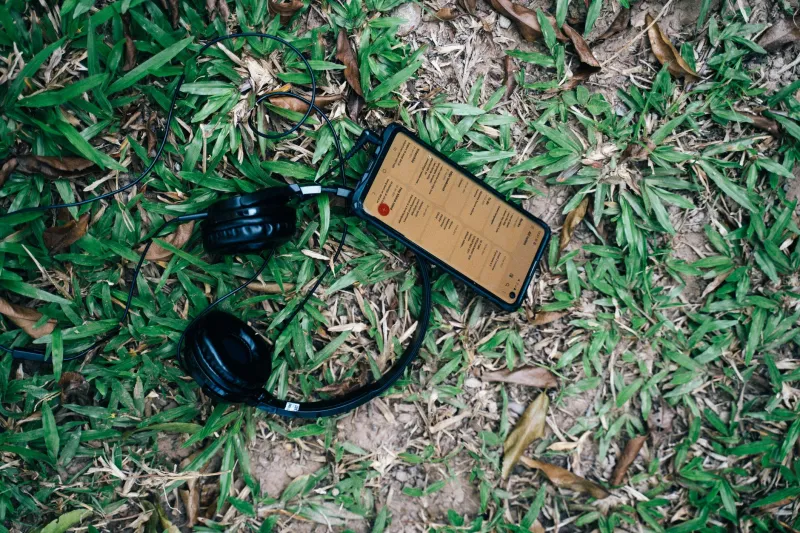
You know the playlist. It's called something like 'Favorites ✨' or 'My Jams 🔥' and it has 547 songs. You made it in 2018, added to it obsessively for three years, and now you genuinely cannot tell where the good stuff ends and the filler begins. Every time you hit shuffle, you skip four songs in a row. At some point, it stopped feeling like a playlist and started feeling like a problem.
Here's the thing: you're not alone. Across the country, people are doing something that feels almost radical in the age of infinite streaming — they're deleting songs. A lot of them. And starting over with something smaller, sharper, and actually listenable.
How We Got Here: The Buffet Effect
Spotify launched in the US in 2011. Apple Music followed in 2015. By the time most Americans had fully made the switch from buying albums to streaming everything, the rules of music ownership had changed completely. Before, you bought a CD, you listened to it. Maybe you burned a mix disc for road trips. There were limits, and those limits had a funny side effect: they forced you to be choosy.
Streaming blew that ceiling off. Suddenly you could add anything, anytime, and it cost the same whether your playlist had 10 songs or 10,000. So people added. And added. And the algorithms helped — Spotify's Discover Weekly, Apple Music's suggestions, the endless 'if you liked this, try that' rabbit holes. Every recommendation felt like a gift. Saying no seemed almost rude.
The result? Playlists that grew so large they became functionally useless. Music psychologists have a term that loosely applies here: the paradox of choice. When there are too many options, the brain doesn't get more satisfied — it gets more anxious. Decision fatigue kicks in. You scroll for two minutes, feel vaguely overwhelmed, and end up putting on the same three songs you always play anyway.
The Purge Begins
Something shifted around 2022 and 2023. People started talking — on Reddit, on TikTok, in group chats — about feeling exhausted by their own music libraries. Threads with titles like 'I deleted my main playlist and I feel so free' started racking up thousands of upvotes. It wasn't just a quirky personal decision anymore. It was a pattern.
The people doing this aren't anti-music. They're often the opposite — serious listeners who realized that more wasn't actually giving them more. They started asking questions like: Do I actually love this song, or did an algorithm just play it enough times that I added it reflexively? Does this playlist still sound like me? Would I be embarrassed if someone saw what was in here?
For a lot of people, the honest answers were uncomfortable.
What the New Playlist Looks Like
The replacements tend to be smaller — sometimes dramatically so. Where someone might have had a 600-song catch-all, they're rebuilding with 30 or 40 tracks they've genuinely vetted. Some people are going even further, creating playlists with a strict cap: no more than 25 songs, period. When a new track earns its spot, something else has to go.
There's also a growing interest in thematic specificity. Instead of one massive 'good songs' list, people are making playlists with almost absurdly narrow purposes. Not just 'morning music' — but 'the exact feeling of driving somewhere new at 7am in October.' Not just 'workout playlist' — but 'the 45 minutes when I actually want to run harder.' It sounds fussy, but users who've tried it say it changes how the music actually lands.
Others are taking cues from the vinyl revival. If you've got a record player and a modest collection of albums, you listen differently. You commit to a side. You sit with something even when it doesn't immediately grab you. Some streamers are mimicking that experience digitally — building playlists that function more like albums, meant to be played start-to-finish rather than shuffled into chaos.
The Anti-Algorithm Crowd
There's a meaningful subset of this movement that's explicitly pushing back against the recommendation engine. Streaming platforms have gotten extraordinarily good at predicting what you might like, and a lot of listeners have started to feel like that's actually the problem.
When an algorithm decides what goes on your playlist, the collection stops being a reflection of you and starts being a reflection of your data. Your listening history, your skips, your saves — they all feed a machine that's optimizing for engagement, not meaning. And engagement and meaning, it turns out, are not the same thing.
Some people describe the experience of a purely algorithm-curated library as feeling weirdly hollow. The songs are fine. They're technically 'your taste.' But there's no story behind them, no memory of why you found them, no sense of personal ownership. Curation, at its best, is a form of self-expression. You can't really express yourself through a machine's guesses.
The Deeper Thing Going On
It's tempting to look at the Great Playlist Purge as just a music trend, but there's something bigger underneath it. Americans have spent the last decade drowning in abundance — streaming libraries, social feeds, online shopping, content on demand — and a growing number of people are starting to push back. Not by going off the grid entirely, but by making smaller, more deliberate choices within the systems they already use.
The playlist purge fits neatly alongside other 'intentional living' shifts: capsule wardrobes, cookbook-only cooking challenges, 'phone-free Sundays.' The through-line is the same. People are deciding that having less of something, but knowing and loving what they have, beats drowning in options they barely use.
There's also something quietly personal about it. Your music library is one of the few digital spaces that's genuinely yours — not a feed curated for engagement, not a product page designed to sell you something. When you clean it up and rebuild it on your own terms, you're reclaiming a little corner of the internet as a reflection of who you actually are.
Should You Do It?
If you've scrolled past your own playlist recently and felt nothing, maybe. The process doesn't have to be dramatic. Some people export their old lists first, just in case. Others go cold turkey and never look back. There's no wrong way to do it.
The only real rule seems to be this: if you wouldn't be genuinely excited to hear a song come on shuffle, it probably doesn't belong in your curated collection. That's a higher bar than most of us have been holding ourselves to. But people who've tried it say the payoff is real — a playlist that actually sounds like you, one that hits every time, because every song earned its place.
Your 547-song 'Favorites ✨' had a good run. Maybe it's time.