Could You Live Here Without a Car? Inside America's Quiet Walkability Experiment
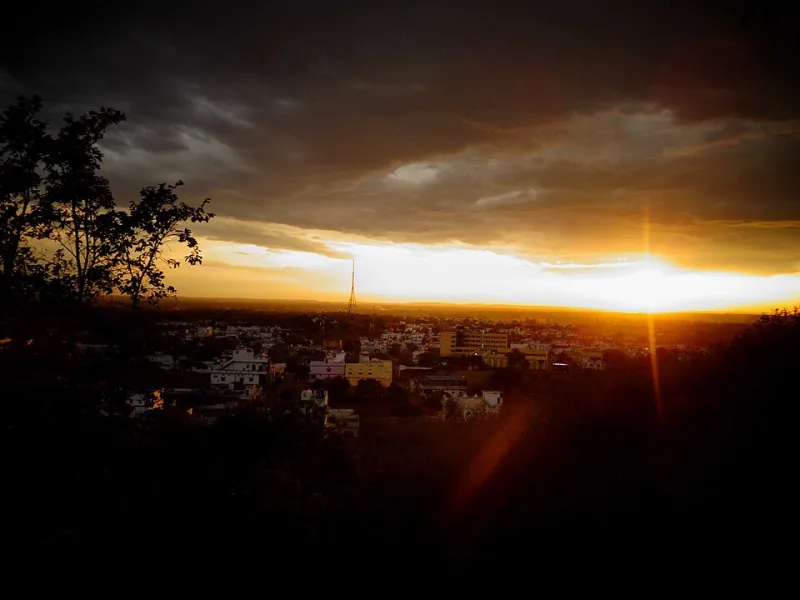
Photo: Harsh Saxena, CC BY-SA 4.0, via Wikimedia Commons
Picture your Tuesday. School drop-off, a pharmacy run, groceries, maybe a coffee with a friend. Now picture doing all of it on foot, in fifteen minutes or less, without ever touching a steering wheel.
For most Americans, that sounds like a fantasy. But in a growing handful of neighborhoods — from Old Town Alexandria, Virginia, to Portland's Pearl District to pockets of Chicago and Savannah — it's just called Tuesday. And the idea behind it, the so-called 15-minute city, is quietly reshaping how American towns think about themselves.
What a '15-Minute City' Actually Means
The concept, popularized by French urbanist Carlos Moreno, is refreshingly simple: everything a person needs on a daily basis — food, school, work, healthcare, parks, fun — should be reachable within a short walk or bike ride from home.
That's it. No conspiracy, no forced lifestyle change. Just a planning philosophy that asks: what if a city worked like the old main street, instead of the highway exit ramp?
What surprises people is how American this idea actually is. The pre-war neighborhoods that people pay a premium to visit — Georgetown, Beacon Hill, the French Quarter — were built on exactly this logic. Cars didn't create walkable places. Walkable places survived cars.
It's Not Just Big Cities Anymore
The obvious examples are the usual suspects: New York, San Francisco, Boston. But the more interesting story is happening in mid-sized and even small towns.
Carmel, Indiana — a suburb of Indianapolis — has spent two decades adding roundabouts, a walkable city center, and connected trails. Bend, Oregon, rezones aggressively to mix housing with shops. Even car-bred Texas is in on it: the massive Mueller development in Austin was designed from scratch around a walkable grid, and the new city of Culdesac Tempe in Arizona opened with a radical pitch — no resident parking at all.
Smaller towns are getting creative too. Grant programs through the federal Safe Streets and Roads for All initiative have funneled money into sidewalks, crosswalks, and Main Street revivals in places most planners never used to think about.
The Real Estate Effect Nobody Ignores
Here's where theory meets your wallet. Walkability is one of the most reliably priced-in features in American housing. Studies from Walk Score data and real estate analysts have consistently shown that homes in walkable neighborhoods command a premium — often in the range of 10 to 30 percent or more compared to similar homes in car-dependent areas.
Part of that is supply and demand: decades of zoning made walkable neighborhoods illegal to build in most of the country, so the existing ones are scarce. As remote and hybrid work loosened the daily commute's grip, people started asking what else their neighborhood could offer — and 'a coffee shop I can stroll to' suddenly ranked higher on wish lists.
Cities have noticed. More than a dozen US municipalities have formally adopted 15-minute or complete-neighborhood goals in their comprehensive plans, from Eugene, Oregon, to Charlotte, North Carolina.
The Honest Caveats
Walkability has a real problem, and it's worth naming: when walkable neighborhoods are scarce and expensive, they can become enclaves. Critics rightly point out that the term has occasionally been weaponized in bad-faith online panic — no one is 'confining' anyone to a zone; the whole point is freedom of choice. But the affordability question is legitimate. If only the wealthy can afford to walk to a grocery store, that's not a win.
That's why the most promising experiments focus on adding walkable amenities to ordinary, middle-income suburbs — the accessory dwelling units going up above garages, the corner store that gets a variance in a former living room, the bus line that finally connects a subdivision to a shopping center.
Could Your Zip Code Be Next?
Want a quick gut check? Open a map and count what's within a 15-minute walk of your front door: a grocery store, a park, a school, a restaurant, a pharmacy. Each one is a point in your neighborhood's favor.
Then watch for the signals. Is your town fixing sidewalks? Allowing duplexes or shops on formerly residential streets? Talking about 'mixed-use' at planning meetings? Those are the quiet early moves.
The 15-minute city isn't coming to America. In a few hundred neighborhoods, it already lives here — and it's been waiting for everyone else to notice.