Unplugged at Home: The Americans Ripping Out Smart Devices and Never Looking Back
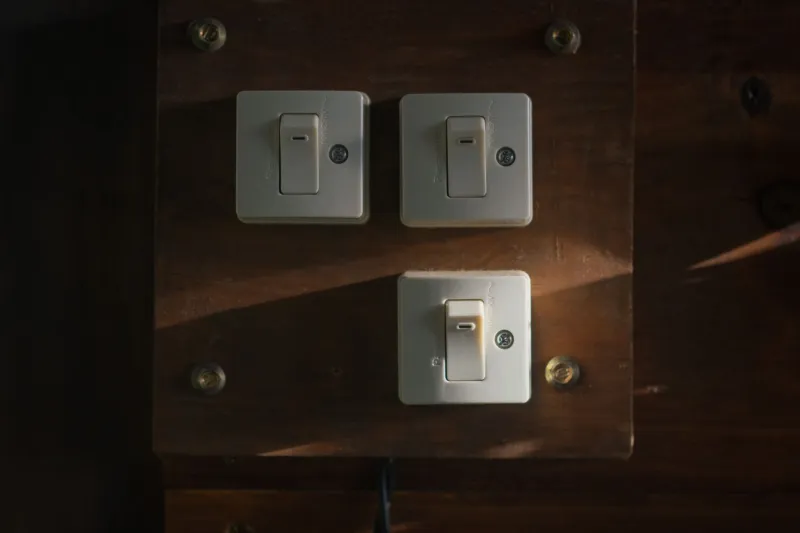
For a while there, the pitch was irresistible. Imagine dimming your lights from the couch. Imagine your thermostat learning your schedule before you even know it yourself. Imagine your doorbell texting you a video of the UPS guy from three states away. The smart home wasn't just a product category — it was a personality, a lifestyle, a vision of the future where your house basically ran itself.
Then the Wi-Fi went out.
And the app needed an update. And the update broke the integration. And suddenly you're standing in your own kitchen at 11 p.m., unable to turn on the overhead light because the hub is offline and your phone is at 4% battery, and you are genuinely, deeply furious at a light switch.
Meet the analog rebellion.
The Backlash Nobody Saw Coming
It's hard to put an exact number on how many Americans have quietly started reverting their homes to dumber, simpler setups — because most of them aren't making announcements. They're just swapping things out, one frustrating failure at a time. But home improvement forums, Reddit threads, and hardware store employees across the country are all telling a similar story: standard toggle switches, manual thermostats, and wired doorbells are selling briskly to people who specifically say they're done with the smart version.
A 2023 consumer survey from Parks Associates found that roughly a third of smart home device owners reported at least one device they stopped using entirely within the first year. That's not a small number. That's a lot of gadgets gathering dust — or getting boxed up for donation.
"I had seven different apps just to run my house," said one homeowner in a popular home improvement forum post that racked up thousands of upvotes. "Seven. I needed a password manager for my light switches."
That sentence — password manager for my light switches — kind of says everything.
App Fatigue Is Real, and It Lives in Your Living Room
There's a term psychologists use called "decision fatigue" — the idea that the more choices you have to make, the more mentally exhausted you become. Smart homes, it turns out, are decision fatigue machines dressed up as convenience.
Every smart device comes with an app. Every app has settings, automations, schedules, and firmware updates. Every update has the potential to break something. And every broken thing requires troubleshooting, forum searches, and the specific kind of low-grade stress that settles into your shoulders and doesn't leave.
The irony is rich: people bought smart home technology to reduce friction in their daily lives. Instead, many found they'd simply relocated the friction — from physical tasks to digital ones. Turning off a lamp used to take one second. Now it takes one second, unless something's wrong, in which case it takes forty-five minutes and a call to customer support.
For a growing number of homeowners, the calculus just stopped making sense.
The Psychological Relief of a Dumb Switch
Here's something that doesn't get talked about enough: there is a genuine, almost physical sense of relief that comes from simplifying your environment. Ask anyone who's ever decluttered a closet or deleted half their apps. The brain responds to reduced complexity with something that feels a lot like exhaling.
Several people who've gone through what they describe as a "tech purge" of their homes report the same thing — a quieter mental baseline. Not because anything dramatic changed, but because small sources of low-level stress just... went away. The notification that the smart lock battery is low. The moment of uncertainty when you're not sure if the thermostat automation is set right. The vague anxiety of knowing your home security cameras are connected to a server somewhere that isn't yours.
When you replace a smart bulb with a regular one, you stop thinking about it. And stopping thinking about it turns out to feel really good.
What People Are Actually Going Back To
The reversal isn't uniform — people aren't gutting everything. Most folks who've scaled back describe a selective retreat rather than a total purge. The smart TV might stay. The Nest thermostat might get swapped out. The voice assistant that was mostly used for timers and weather gets unplugged because, honestly, a phone does that fine.
What's going is the stuff that caused the most friction for the least payoff. Smart plugs that needed rebooting. Automated blinds that got out of sync. Doorbell cameras that pinged every time a car drove by. The technology that was supposed to fade into the background but kept demanding attention.
What's coming back is refreshingly boring. Honeywell manual thermostats. Basic deadbolts with physical keys. Light switches that click satisfyingly and work every single time, forever, without an internet connection.
The Bigger Picture
This isn't really about technology being bad. It's about the gap between what technology promised and what it actually delivered — and the very human response of cutting your losses when that gap gets too wide.
The smart home industry sold a vision of frictionless living. What it often delivered was a different kind of friction, one that felt more helpless because you couldn't fix it yourself with a screwdriver. When your old thermostat broke, you called an HVAC tech. When your smart thermostat loses its Wi-Fi connection and locks you out of manual control, you feel like a stranger in your own house.
That feeling — being locked out of your own home by your own home — might be the single most telling detail of why this backlash is happening.
Some people are done optimizing their living rooms. They just want to turn the lights on.